


Comprehensive Rodent Exclusion
OK… We’ve exterminated the mice, but what about all the damage they have done. They’ve made holes in the basement insulation, left dropping near the basement walls, and the house now has a mousey odor. Those are the things that are obvious. In fact, they’ve done a lot more damage than that. Mouse droppings, urine, and nesting materials can contaminate insulation and enclosed spaces, contributing to poor indoor air quality and unpleasant odors. In some cases, rodent contamination can be a concern for individuals with asthma, allergies, or compromised immune systems. Because modern homes are tightly insulated, contaminants in basements and crawlspaces can remain trapped unless properly removed and treated. Fox Valley Environmental Pest Control provides mouse-proofing, cleanup, and insulation services for homes throughout Kane and DuPage counties and the surrounding Fox Valley area.
Mouse-proofing
It would be more correct to use the term ‘Mouse Resistance’ as, with the ability to chew, climb brick and smooth concrete, squeeze into gaps the size of a standard pencil, and the tenacity of an Olympic athlete, mice will continue to thwart your efforts to keep them out. Below is an overview of how FVEPC approaches comprehensive mouse resistance.
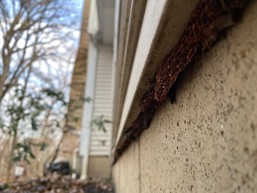
Basements and crawlspace mouse exclusion
Basements and crawlspaces are often the primary entry points for mice entering homes throughout Kane and DuPage counties. In most cases, mice do not enter directly into kitchen or living spaces outdoors, but instead travel upward from lower levels of the structure through wall voids, utility penetrations, and floor cavities. Older homes are especially vulnerable due to gaps around water lines, gas lines, electrical conduit, sump discharge lines, and vent penetrations that provide concealed access into the home.
Crawlspaces and basements also tend to experience the most severe rodent contamination, particularly around insulation, stored materials, and utility areas. Long-term infestations in these spaces can lead to extensive droppings buildup, damaged insulation, odors, and recurring rodent activity if structural entry points are not properly sealed.
Fox Valley Environmental Pest Control technicians perform detailed rodent exclusion inspections designed to identify concealed structural entry points throughout the home, including utility penetrations, siding gaps, foundation cracks, crawlspace vents, and many other places.
Outside perimeter and inside the garage
The area immediately above the concrete stem-wall is where holes are cut to put in gas, electric, AC, water lines, dryer vents, etc. These holes are often larger than needed and are often improperly sealed allowing mice easy access.
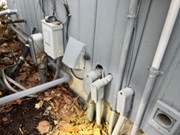
Nearly every home requires sealing of the exterior of the house and the interior of the garage. This is accomplished in most cases with a proprietary product designed by FVEPC commonly referred to by clients as ‘Rodent Rope’. AICR is basically a flexible copper cable which is often used seamlessly around the outside perimeter. Unlike hard metal flashing materials, our Rodent Rope solution conforms tightly to the shape of your home and the gaps being filled. Other strategies and materials may also be required. The work is done by university trained FVEPC staff, and the ‘seal’ is guaranteed with yearly inspection and maintenance.
Every situation is different, but common materials used to seal are those mice cannot chew, such as metallic cloth, lumber, and concrete. Soft materials such as expanding foam are sometimes involved but are never depended upon as the strategy to seal mice out, as they can chew through it.
Even if your home was initially well sealed, utility work, exterior damage/decay, or siding replacement can open new holes allowing mice unlimited access. Many other areas are less obvious and often require that damaged insulation be removed to find and repair the hidden entryways. This is particularly important when sealing old and crumbling foundation and brick, as these can provide hidden passageways for mice directly into the basement.
Once mice are sealed out of the home, it is an appropriate time to look at cleanup and damage mitigation options. The droppings will continue to aerosolize for as long as they are in the home, so cleaning is an important step. If they have significantly damaged the insulation of the home, a thorough decontamination and re-insulation will be needed.
FAQs
Can I seal mice out myself?
In many cases, no. Mice require a gap the size of a pencil to enter your home, and sealing every little gap is a dirty and difficult endeavor.
Why do mice keep coming back after extermination?
Extermination alone often does not solve the underlying problem if structural entry points remain open. Even small gaps around utility lines, foundations, soffits, or crawlspaces can allow new mice to repeatedly enter the home. Proper rodent exclusion and sealing is critical for long-term control
How do mice get into basements and crawlspaces?
Mice commonly enter homes through gaps around utility penetrations, crawlspace vents, garage slab gaps, siding transitions, and foundation openings. In many homes throughout Kane and DuPage counties, mice travel upward from basements or crawlspaces into kitchens and living areas through wall voids and floor cavities
Can mice damage basement or mouse insulation?
Yes. Rodents frequently nest inside insulation and contaminate it with droppings, urine, nesting material, and odors. In severe infestations, insulation may collapse, lose effectiveness, or require removal and replacement
Do you offer mouse-proofing and insulation services in Kane and DuPage counties?
Yes, FVEPC provides mouse-proofing, rodent cleanup, and basement insulation services throughout Kane County, DuPage county and nearby Fox Valley communities in the Chicagoland area