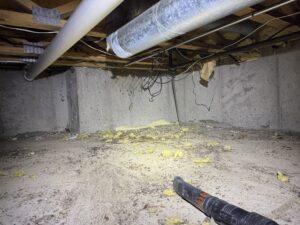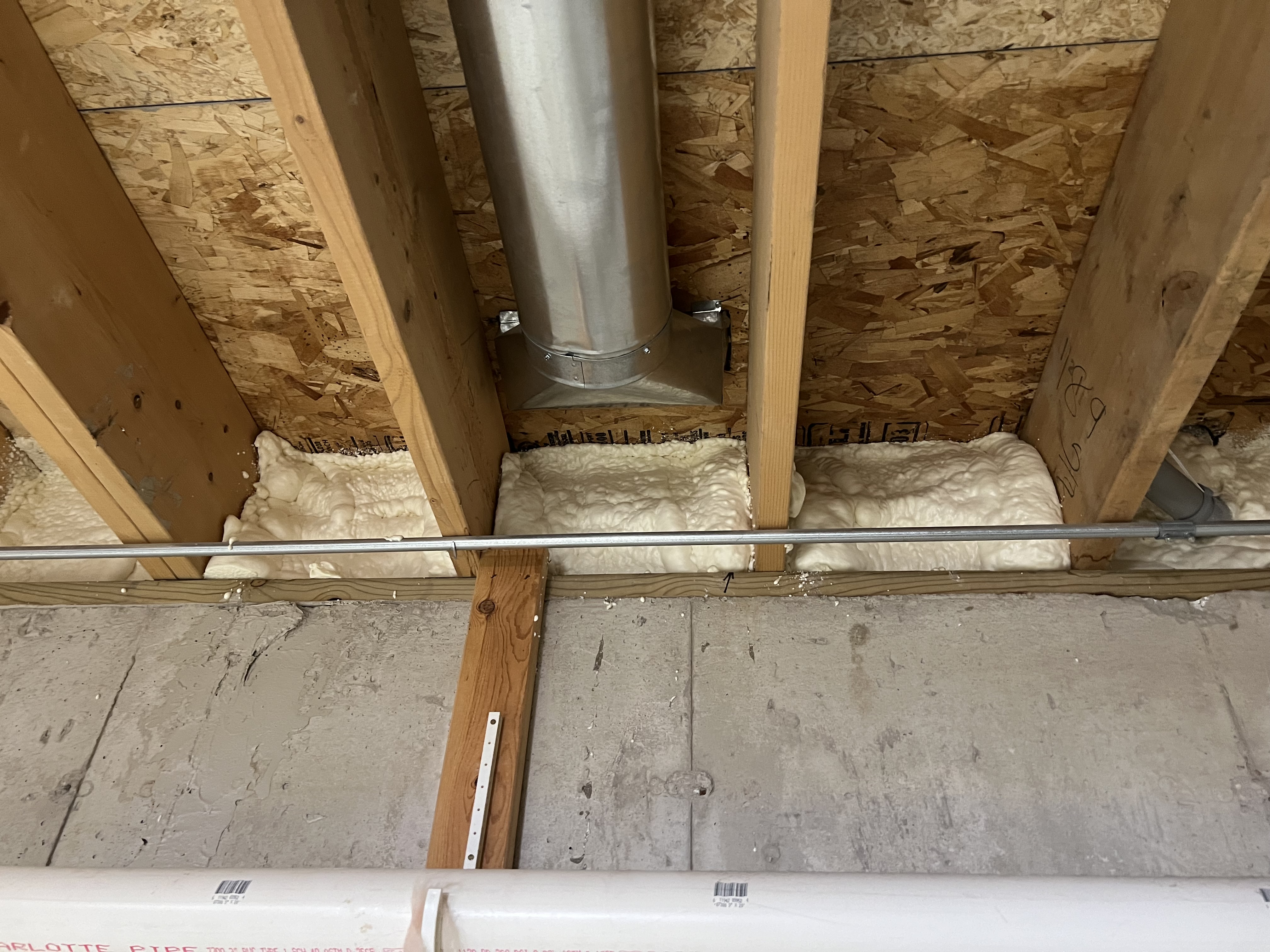
If your furnace is running constantly but parts of your home still feel cold, the problem usually isn’t that you don’t have insulation.
It’s that air is moving right through it.
This is one of the most common issues we see during winter inspections—especially in older homes throughout Northern Illinois. Homeowners assume insulation equals comfort, but that’s only true when insulation is paired with proper air sealing.
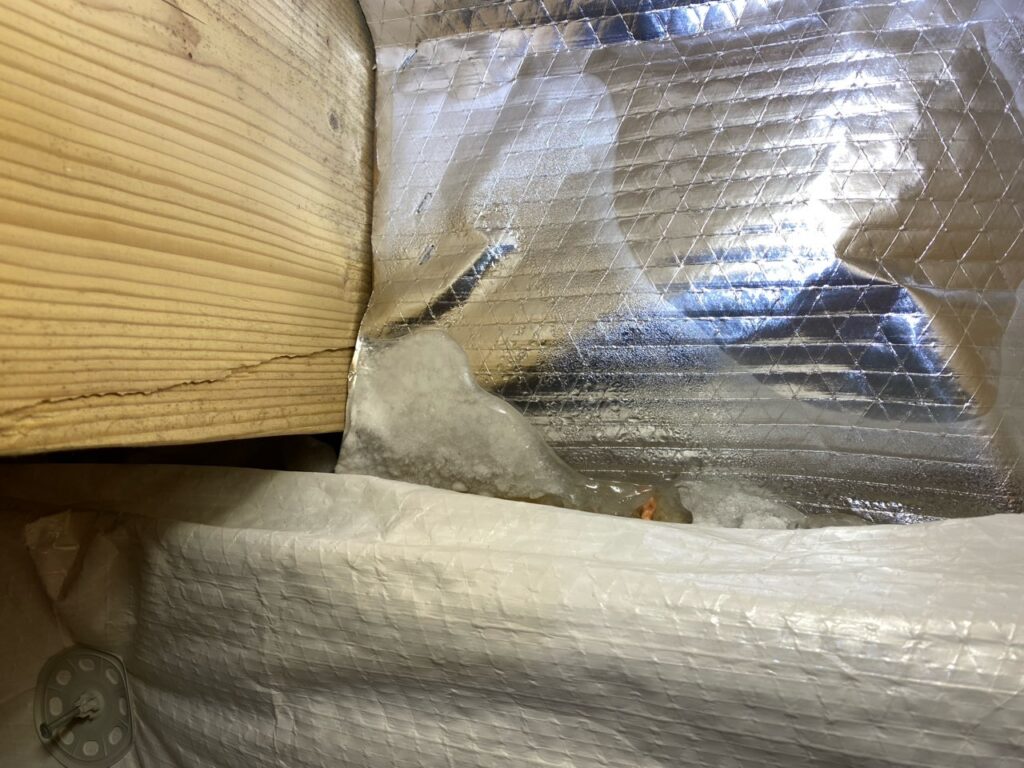
The photo above was taken inside of a brand new house that also had mice issues. The home was in a rural area facing the wind, and no effort was put into making sure that the house had a good air seal. Obvious air sealing problems that have the potential to result in not just a draft basement, but mold and wood rot over time.
Insulation Slows Heat — Air Leaks Remove It
Traditional fiberglass insulation is designed to slow heat transfer, not stop air movement. When cold outdoor air leaks into a home, it can bypass fiberglass almost entirely.
Common winter air leakage points include:
Rim joists above foundation walls
Sill plates
Cantilevered floors
Basement and crawl space framing
Garage-adjacent walls
When cold air is allowed to move freely through these areas, even well-insulated homes can feel drafty, uneven, and uncomfortable.
Why These Problems Are Worse in Winter
Winter makes air leakage impossible to ignore.
As warm air rises and escapes from upper levels of the home, cold air is pulled in at lower levels—a process often called the stack effect. This is why homeowners notice:
Cold basement ceilings
Cold floors on the main level
Drafts near baseboards
Rooms that never seem to warm up
The colder it gets outside, the stronger this effect becomes.
The Most Common Areas We Find Heat Loss
During inspections, we repeatedly see the same problem areas:
Rim joists that were never air sealed
Fiberglass stuffed into gaps without proper backing
Cantilevered floors that allow wind exposure
Basement framing with visible air movement
Crawl spaces that leak cold air into the structure
These areas often overlap with where pests enter a home as well—because air gaps and rodent entry points are usually the same openings.
Why Spray Foam Works When Fiberglass Falls Short
Spray foam insulation addresses the root problem: air movement.
Unlike fiberglass, spray foam:
Expands to seal cracks and gaps
Blocks air infiltration
Adheres to framing and masonry
Prevents insulation collapse
Improves comfort immediately
Spray foam acts as both insulation and an air barrier, which is why it performs so well in cold climates.
Spray foam isn’t just insulation — it’s air sealing.
Comfort, Energy Use, and Long-Term Performance
When air leakage is reduced, heat stays inside, resulting in more even temperature distribution across the home, warmer floors, less drafts, and fewer furnace cycles. While every home is different, homeowners consistently notice improved comfort and more stable indoor temperatures after spray foam is installed in problem areas Cold weather makes insulation failures obvious. Drafts, cold floors, and temperature swings are easier to detect now than in warmer months. That’s why winter inspections often reveal issues that go unnoticed the rest of the year.
The photo earlier in the article is something that was only obvious on a cold and windy day, so whenever it is particularly cold and windy it is a good time to take a close look at your basement insulation to look for anything out of the ordinary
Schedule an Inspection
If your home feels cold despite having insulation, spray foam may be the missing piece.
We provide professional spray foam insulation and air sealing services throughout Kane County, DuPage County, and surrounding areas, often as part of full home exclusion and repair work.
Addressing air leaks now can improve comfort all winter—and prevent larger issues down the road by calling FVEPC!