Finding small moths around the kitchen or pantry is definitely unsettling, especially when they keep showing up no matter how often you are cleaning. One of the most common culprits is the Indian Meal Moth, a common and widespread pantry pest found throughout Northern Illinois homes and businesses.
Indian meal moths don’t damage your house, but they do contaminate food and can quickly turn into a frustrating, ongoing problem if not handled promptly and effectively. Here’s how to identify them, where they come from, and what actually works to get rid of them.
What are Indian Meal Moths?
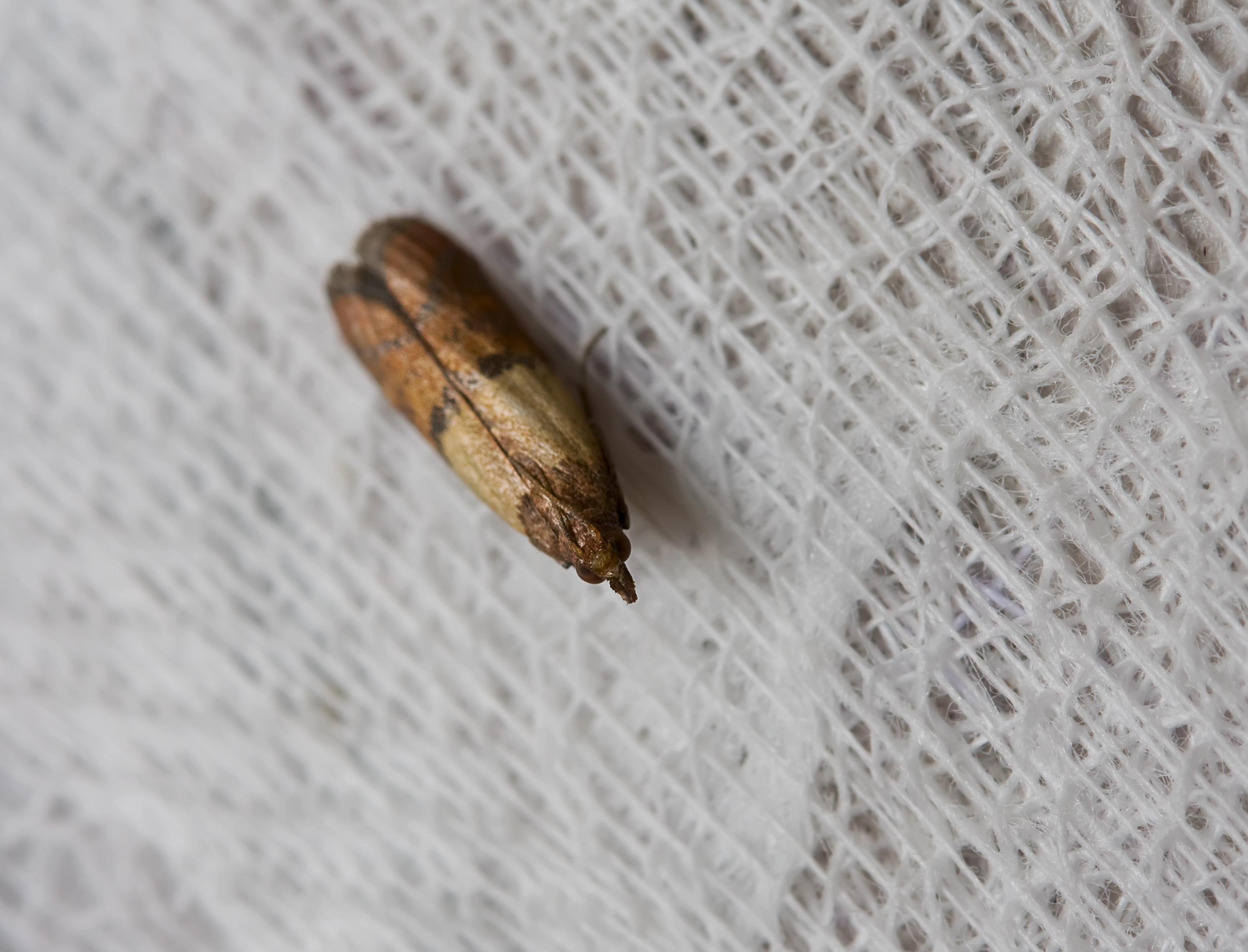
Indian meal moths (Plodia interpunctella) are small pantry moths that infest stored food products. Adults are typically about 1/2 inch long with a distinctive two-tone wing pattern: light gray near the head and reddish-brown or copper toward the rear.
The moths you see flying around are only part of the problem. The real damage is being caused by the larvae, which are feeding on dry food items and leave behind webbing, droppings, and other contaminants.
Signs You Have an Indian Meal Moth Problem
You are likely dealing with Indian Meal Moths if you notice the following things:
- Small moths flying in the kitchen or pantry, especially in the evening
- Webbing or clumps inside food containers or packages
- Tiny cream-colored larvae crawling inside food or along pantry shelves
- Moths appearing weeks after you think the problem is gone
How Indian Meal Moths Get Into Homes
They almost always arrive inside of food products, which means the infestation starts before you even purchase the item. This can be from grocery store purchases, bulk food items, pet food, bird seed, or items stored in garages and utility rooms.
The eggs are tiny, and hard to spot, so it can be difficult to find the source of the problem. The larvae and pupae often hide in cracks and crevices, or behind trim. Adults can continue emerging for weeks with no clear source, so controlling the issue can be very difficult. Simply killing the moths you see does not solve the root of the problem
Common Foods Indian Meal Moths Infest
They feed on a variety of dry goods, including:
- Flour, rice, pasta, and cereal
- Pet food and bird seed (more on this below)
- Nuts, seeds, and granola
- Baking ingredients
- Candy and chocolate
- Protein powders and dry supplements
Even unopened packages aren’t safe, since larvae can chew through thin cardboard, plastic, and even foil packaging.
A Commonly Overlooked Source: Bird Seed and Pet food
Many recurring Indian meal moth problems don’t come from the kitchen at all. A very common source is bird seed or pet food stored in garages, basements or utility rooms.
Bird seed and pet food are especially vulnerable to infestation because they are often produced in bulk and are not treated to the same degree as food intended for human consumption. In some cases, eggs may already be present inside the packaging when the product is purchased.
Once stored in warm areas like garages or pantries, those eggs can hatch and develop unnoticed for weeks. Homeowners may clean their kitchen thoroughly, only to have moths reappear because the original source was never removed.
For this reason, all bird seed and pet food should be stored in airtight containers, and garages should always be checked when dealing with ongoing pantry moth activity.
What to do if you find Indian Meal Moths
Step 1: Inspect and Discard Infested Food
Remove everything from the pantry. Any item showing signs of larvae, webbing, or contamination should be sealed in a bag and discarded immediately. When in doubt, throw it out. Keeping “maybe safe” items often restarts the infestation
Step 2: Deep Clean the Pantry
Vacuum all shelves, corners, cracks, peg holes, and shelf supports. Dispose of the vacuum contents outside right away. Then wipe down surfaces using soap and water. Avoid spraying insecticides inside food storage areas.
Step 3: Store Food Properly
Going forward, store any dry goods in either glass, metal, or airtight plastic containers. Thin paper packaging is not sufficient protection, as larvae can easily dig through materials like cardboard.
Step 4: Trap and monitor until the problem is resolved
Indian Meal Moth pheromone traps can confirm the species, and monitor activity levels over time. While they will not eliminate infestations by themselves, traps are useful as part of a larger control plan. Be sure to monitor any areas human or animal food is stored, as neglecting any one of these can lead to a months-long battle.
Frequently asked Questions
Are Indian meal moths harmful to people?
They don’t bite or spread disease, but they do contaminate food and should be addressed promptly.
Do Indian meal moths damage homes?
No. They’re a nuisance pest, not a structural one
How long does it take to get rid of them?
With proper cleanup and treatment, activity usually drops within weeks, but full elimination usually depends on removing all breeding sources.
Can you “save” food infested by Indian meal moth larvae?
Technically, yes-practically, no. You cannot apply pesticides directly to infested food, but temperatures below 0F for six days will kill them. Most people do not have access to a freezer this powerful, so throwing out food is the only practical way to get control.