About Ticks
Tick populations have risen sharply across Northern Illinois over the last several decades. Once considered mostly a problem in the heavily wooded regions of the Northeast, ticks are now increasingly common in suburban yards, forest edges, walking trails, and residential properties throughout Kane, DuPage, McHenry, Lake, and northwest Cook counties.
No one factor is responsible for this increase. Northern Illinois has gradually become a better habitat for ticks. Warmer weather, denser understory growth, fragmented forests, the spread of highly adaptable host animals, and an infrequently discussed process known as mesophication have all combined to make the region far more favorable to tick survival than it was a generation ago.
Species in Illinois
Blacklegged Tick (Ixodes scapularis)
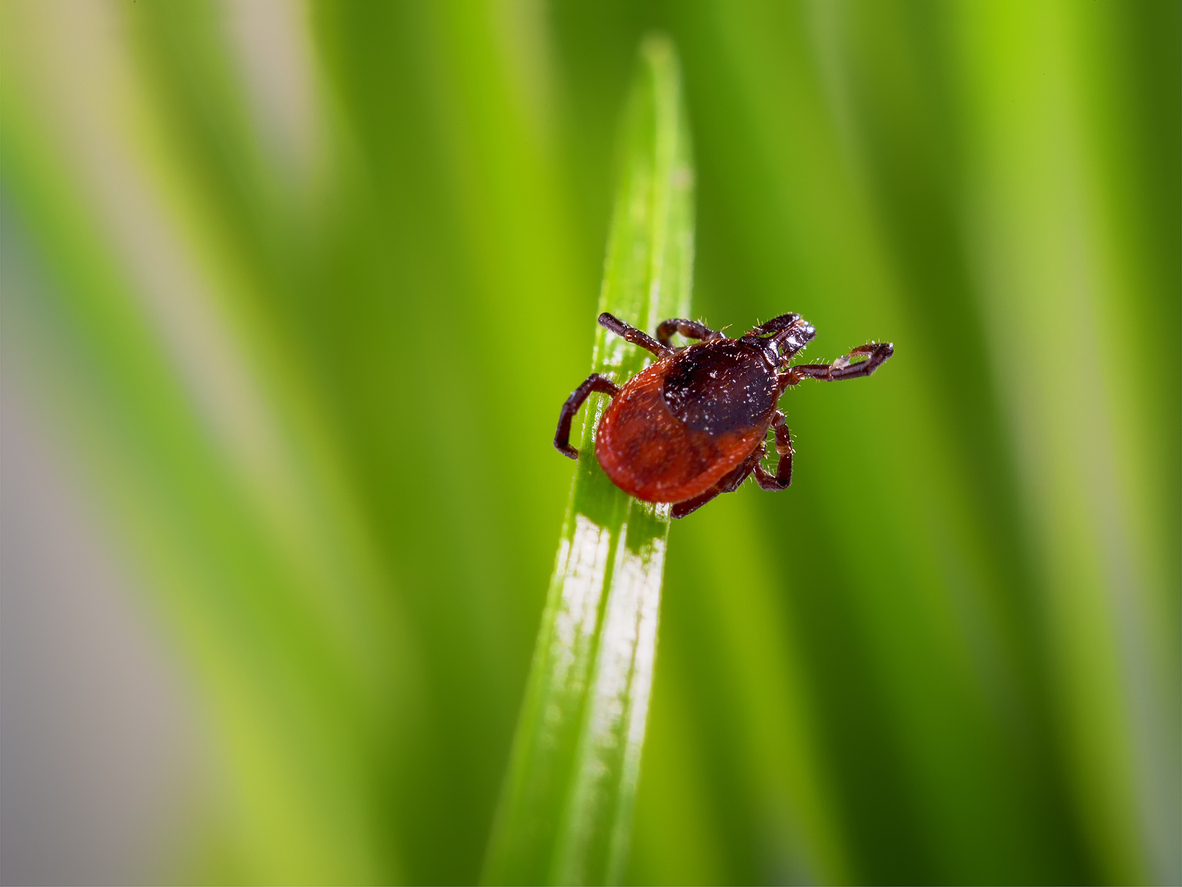
Also known as the Deer Tick, the blacklegged tick is the most medically significant tick in Northern Illinois, largely due to it being the primary vector for Lyme disease. It can also transmit anaplasmosis and babesiosis. Because of its growing abundance and strong association with Lyme disease, this species is the primary focus of tick surveillance and the primary focus of this article.
The American Dog Tick (Dermacentor variabilis)
The American Dog tick remains common in Illinois, especially in grassy fields, trails, and unmanaged vegetation. While it is less associated with Lyme disease, it can transmit Rocky Mountain Spotted Fever
Lone Star Tick (Amblyomma Americanum)
The Lone Star Tick has historically been more common in the southern United States and Northern Mexico. The name comes from the distinct white spot on its back, and it is best known medically for causing alpha-gal syndrome, a chronic red meat allergy. Its range has been trending northward over recent years, having been spotted in areas of southern Illinois.
The Brown Dog Tick (Rhipicephalus sanguineus)
This tick is also not very common in Illinois, but remains important because it can survive in and around homes, kennels, and other indoor environments. It is unique that it can complete much of its life cycle near human structures and is capable of transmitting several canine and human pathogens
Tick Life Cycle
Ticks go through four life stages: egg, six-legged larva, eight-legged nymph, and adult. After hatching from eggs ticks must eat blood at each stage to survive. As they feed on animals early in their lifecycle, they often acquire pathogens passed onto other animals or people later in their life. A full life cycle for the Blacklegged Tick generally lasts two years.
Ticks can mate either while on or off a host, but female ticks will generally drop to the ground to lay anywhere from 2,000-8,000 eggs, often laid in clusters. These eggs require high humidity to prevent from drying out and typically hatch in a few weeks.
Bites and diseases

Ticks do not jump, fly, or drop down from trees. They will wait on grass, brush, leaf litter, and low vegetation with their front legs extended, a behavior known as questing. Ticks will frequently be picked up on a shoe or pant leg, and then will climb up until they find skin to bite down on.
Most tick bites are not felt immediately. Their saliva produces a local anesthetic effect to mask the bite, so you likely will not know there is a tick until you physically locate it hours or days later. This is a huge reason they are such effective disease vectors- in many cases, the person never realizes they were bitten until the tick is discovered later or symptoms begin to appear.
Lyme disease, the most well-known tick-borne illness in the United States, was first identified as a distinct medical condition in Lyme, Connecticut in the 1970’s. While the disease gained its modern name there, evidence of Lyme-like infection has been identified much earlier, including in ancient human remains.
Increases in Tick-borne diseases
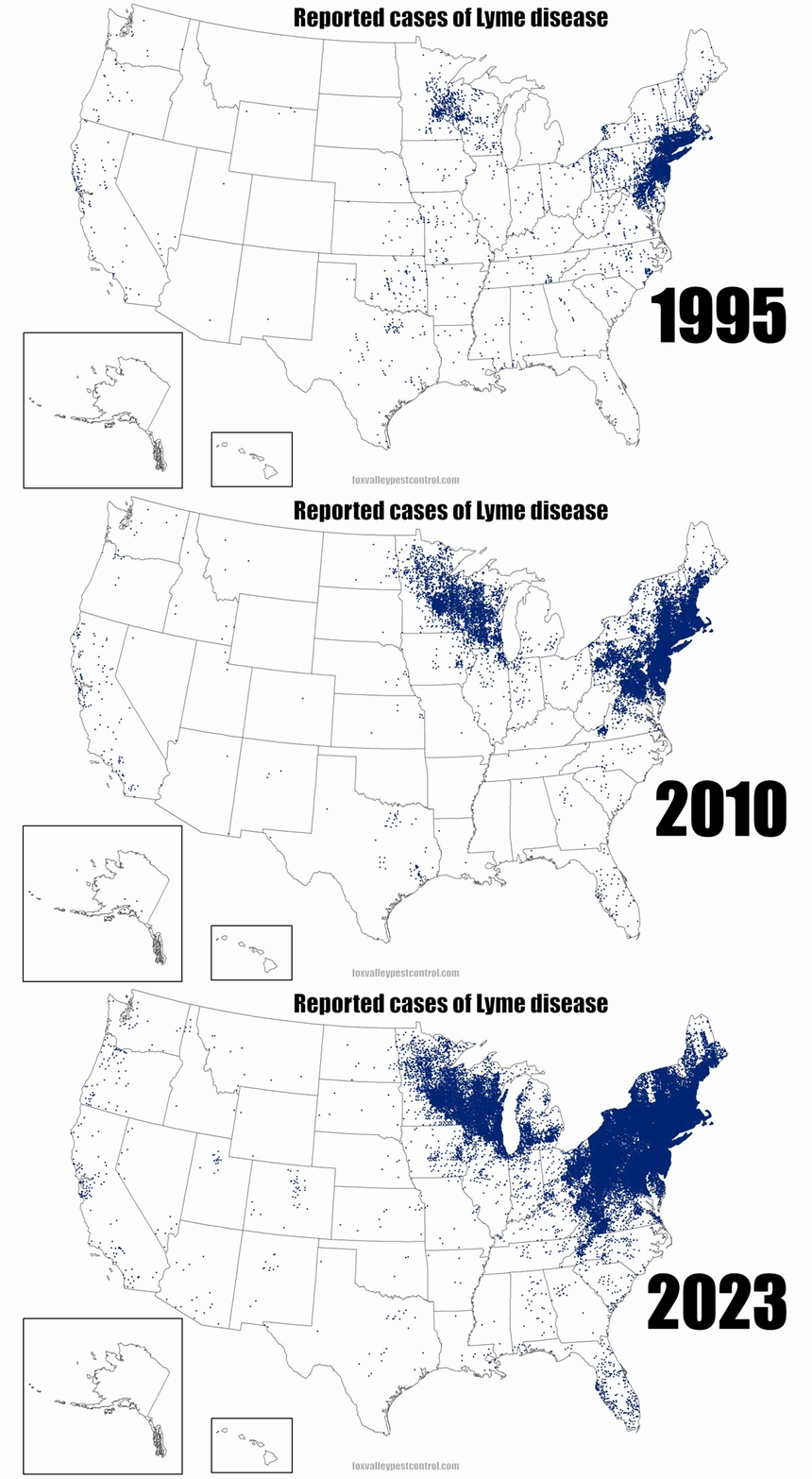
The CDC Lyme disease case map shows the expansion of Lyme-endemic regions from the Northeast, to being established among the Great Lakes and the upper Midwest. This has corresponded with a steady year over year increase in Lyme disease cases. The CDC tracks ER visits for tick bites, and documented instances of Lyme disease over time. ER visits for tick bites for 2026 are well above average as of April 2026, the highest in a decade of tracking.
The IDPH (Illinois Department of Public Health), in partnership with the Illinois Natural History Survey at the University of Illinois, conduct full-time tick surveillance in Illinois. These maps show that ticks have become established in most counties of central and Northern Illinois, with Lyme transmission becoming more firmly established. Most worrying is that out of the blacklegged ticks collected, 43% test positive for Lyme Disease, with Winnebago county being the highest at 71% according to the Illinois Lyme Association.
What to do if you are bitten
Lyme disease transmission becomes more likely the longer it has been attached, so removing them as early as possible is important. After 24-48 hours, risk of transmission climbs significantly.
To remove them, it is best to use fine-tipped tweezers around the tick’s mouthparts, as close as possible to the skin. Pull outwards firmly without twisting. Be sure to not squeeze the body of the tick, as that can push the contents of the tick into the bloodstream and potentially expedite disease transmission.
Reasons for their population explosion
Forest fragmentation
Before large-scale development, much of Illinois was dominated by open prairie with interspersed woodlands, oak savanna, and larger connected woodland systems. Today, roughly 75% of Illinois is agricultural land with much of the remainder divided among suburbs, roads, isolated forest preserves, and scattered woodlots. While some woodland remains, much of it now exists as smaller and more fragmented patches than it once did.
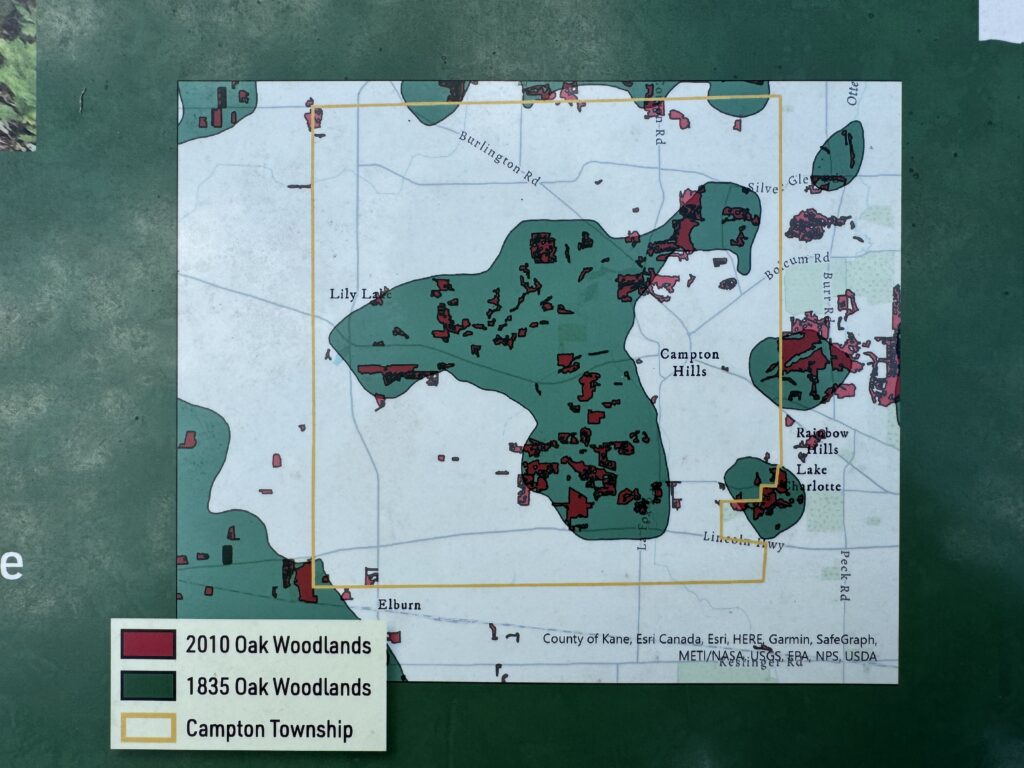
The map above, photographed at Harley Woods Forest Preserve, shows just how dramatic that change has been in Campton Township. In 1835, oak woodlands covered much larger portions of the landscape, but by 2010 it has been reduced to small and isolated fragments surrounded by roads, development, and farmland. This kind of fragmentation does more than reduce forest cover. It changed the structure of the habitat that remains.
Smaller woodland patches create more “edge habitat” as these woods meet lawns, fields, and neighborhoods. These edges tend to hold more leaf litter, retain more moisture, and funnel wildlife movement through concentrated corridors. For ticks, that makes fragmented woodland especially favorable. Edge habitat provides humidity, shelter, frequent host traffic, and regular contact with people and pets. As suburban development continues to push into former agricultural and wooded land, more homes are being built directly against the kind of habitat where ticks thrive.
Mesophication
One of the most important yet less discussed drivers of rising tick populations is mesophication.
Mesophication refers to the transformation of open, dry, fire-dependent habitats into denser, cooler, wetter forests. Historically, much of the Midwest experienced periodic fire, most frequently from lightning strikes and from indigenous burns. These fires were crucial in maintaining open woodland structure and suppressed dense understory growth.
Fragmentation by human development and ending of indigenous burning practices in the late 19th century began this process, and was further accelerated with Federal fire-suppression policies starting around the 1920’s. At the time, the importance of periodic, low-intensity fires of maintaining open woodlands was not well understood. All level of forest fires were deemed harmful, so many regions started undergoing the mesophication process as fires all but vanished from the landscape. These campaigns are where the infamous line “Only YOU can prevent forest fires” from Smokey the Bear comes from. These policies were well-intended at the time to prevent massive fires, but came with long standing ecological consequences.
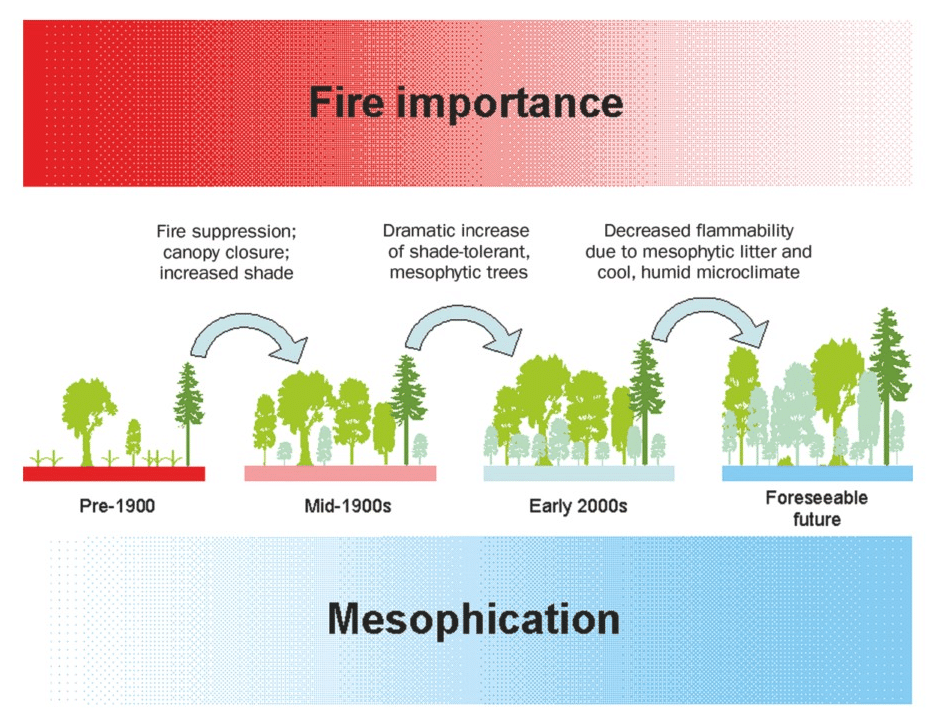
Nowacki & Adams (2008) describe in detail how without these fires, competitive opportunistic tree species populated the lower forest areas, such as red maple, beech birch, cherry, and invasive shrub species like Buckthorn and Honeysuckle filled in forest floors. These shade-tolerant species have large leaves, casting heavy shade and limiting air movement. Moisture levels at the forest floor increase dramatically as a result.
Ticks, and especially their eggs, are highly vulnerable to drying out, so the cool, humid environments of fragmented forest lands became the ideal habitat for them. Dense understory growth and heavy leaf litter help ticks retain moisture, protects them from the summer heat and winter freezes.
As mesophication is something that is not frequently discussed together with ticks, we hope that a greater understanding of what this process is will assist homeowners in mitigating the environmental factors that have allowed tick populations to increase as much as they have in the past several decades. It is the main reason that ticks and their eggs can even survive in such great numbers through the summer heat and winter cold, and has created a much more favorable environment to their most important hosts: white-footed mice and deer.
White-footed mice and Lyme Reservoirs
White-footed mice have become one of the most important contributors to tick-borne disease in the Midwest. These small mice thrive in fragmented forests, dense brush, wood edges, and suburban natural areas. They benefit from the same environmental changes that benefit ticks: more understory cover, more food, and fewer natural pressures.
White-footed mice are especially important because they are highly effective reservoirs for Lyme disease. Ticks that feed on infected mice can acquire the bacteria responsible for Lyme disease and carry it into later life stages.
Deer overpopulation
Adult blacklegged ticks frequently feed on deer. While deer are not considered major reservoirs for Lyme disease itself, they are critical reproductive hosts for ticks. Female ticks that successfully feed on deer can servive long enough to lay thousands of eggs.
Northern Illinois supports large deer populations due to a combination of fragmented forests, suburban landscaping, agricultural food sources, and reduced predation pressure. Deer are constantly moving between preserves, wooded corridors, subdivisions, and backyards, carrying adult ticks with them.
Climate change and longer tick seasons
Ticks are strongly influenced by temperature and humidity. Warmer winters improve overwinter survival, especially for ticks protected by leaf litter and dense ground cover. Earlier springs and later falls also extend the period when ticks remain active.
This means ticks are now active for more of the year and fewer are lost to winter mortality. In practical terms the season when people, pets, and wildlife can encounter ticks is longer than what it once was.
Why Northern Illinois specifically?
Due to a confluence of factors, like the ones mentioned above, Northern Illinois has become a structurally better habitat for ticks. Fragmented forests create edge habitat. Mesophication creates cool and humid understory cover. White-footed mice provide efficient disease reservoirs, while deer provide reproductive hosts. Warmer weather improves survival and extends seasonal activity. At the same time, suburban and exurban development is placing more people directly against this habitat.
Managing Ticks
Environmental modifications
If you live on a wooded lot, managing aspects of their environment can significantly help reduce tick proliferation on your property
- Remove invasive brush. Large bushes like Buckthorn and Honeysuckle contribute to the leaf litter and heavy moisture on the forest floor that is so conducive to ticks, while outcompeting native species
- Remove leaf litter. This helps dry out the forest floor, reducing tick harborage and also helps native species grow.
- Control rodent populations. If there is a significant number of creatures that travel around your property, they will deposit ticks as they travel. While not all creatures can be stopped, control of key species like white-footed mice can reduce the number of ticks in your yard and carried into your home.
Pesticide applications
Even with strong environmental management, ticks are difficult to eliminate through habitat modification alone. Professional tick control treatments are often the most effective way to reduce active populations around the home. Targeted applications to lawn edges, wooded borders, and other high-humidity areas can significantly reduce tick activity and limit movement into regularly used parts of the property.
For properties with heavy brush, wooded edges, or consistent tick pressure, routine seasonal treatment is the most reliable way to reduce tick exposure.