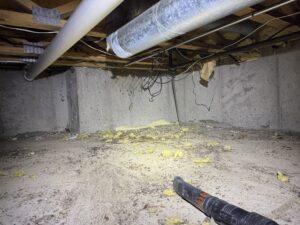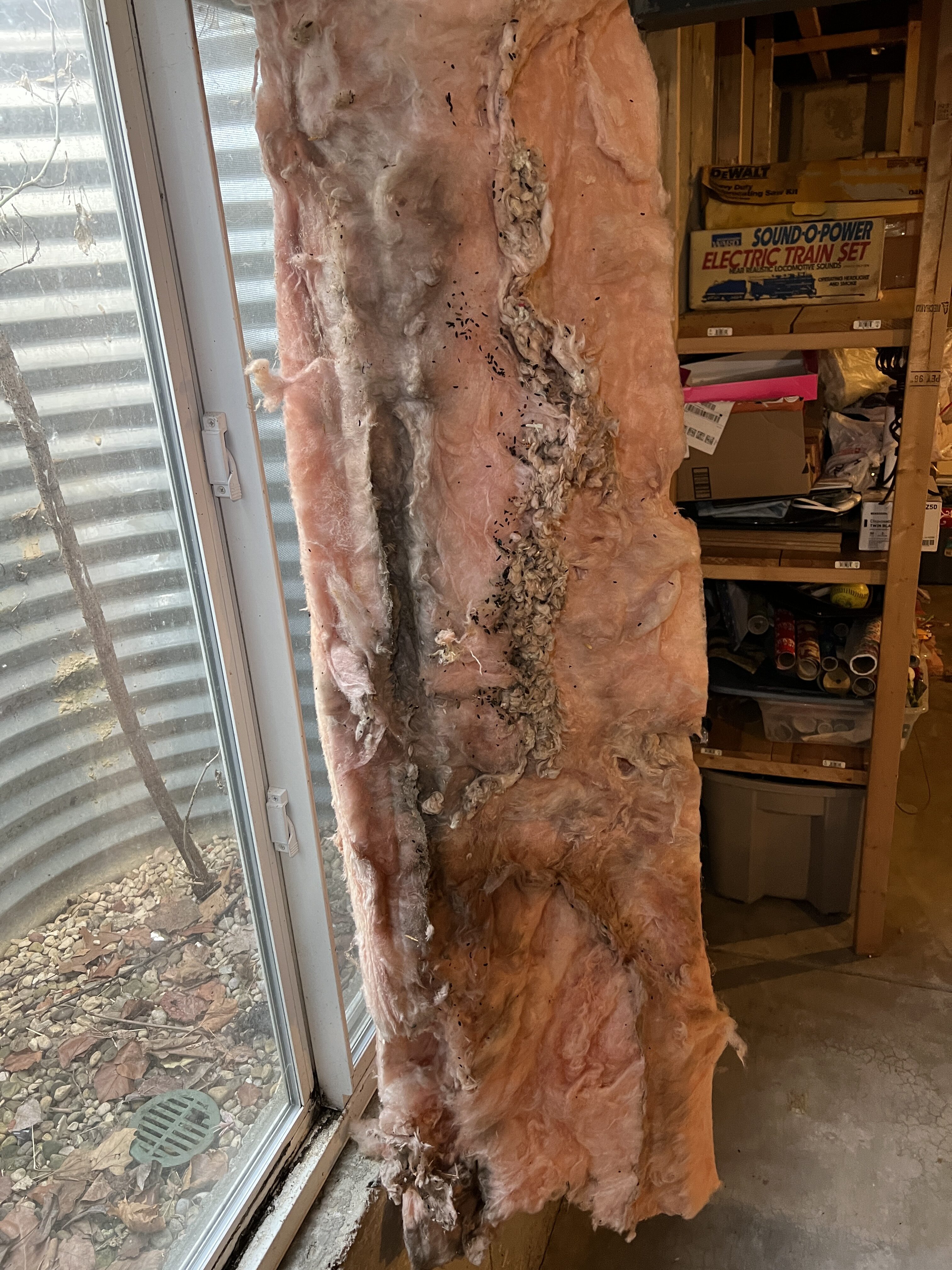
Most homeowners never think twice about what’s behind their walls. Insulation is supposed to be clean, dry, and untouched once it’s installed. Unfortunately, this isn’t always the case. The photo above shows fiberglass insulation removed during a cleanup. What you are looking at isn’t dirt or construction debris, it’s nesting material, urine staining, and droppings embedded into the insulation after mice gained access to the wall cavity. Once the insulation has been contaminated by mice infestations, it usually requires professional insulation removal and replacement to fully correct.
Why Mice go straight for insulation
When mice enter a home, insulation is one of the first places they target. Fiberglass insulation offers
- Warmth
- Protection from predators
- Easy tunneling
- Material for nesting
Fiberglass doesn’t stop mice- it’s perfect nesting material for them. Once they are inside, they move freely through wall cavities, compressing insulation as they go and creating hidden nesting areas.
What happens behind the wall
The damage caused by mice inside insulation often goes unnoticed for years. Unlike a kitchen infestation, there may be no visible droppings or sounds once activity slows down. This is because in most basements, the entry points are along the rim joist, so unless they climb down the the basement floor there may be no obvious signs of them.
Behind the wall, however, several things are happening:
- Insulation loses effectiveness: Tunnels and nesting collapse the fiberglass, reducing its R-value and increasing heat loss.
- Urine and droppings contaminate large areas: Fiberglass absorbs moisture and odor. Once contaminated, it cannot be cleaned or deodorized. In many cases, the only way to restore energy efficiency is to remove the damaged material and install new insulation
- Odors spread through the home: Wall cavities act like air channels, allowing smells to move into living spaces
- Health concerns increase: Mouse droppings and urine can introduce bacteria and allergens back into the home environment
Signs you may have this problem
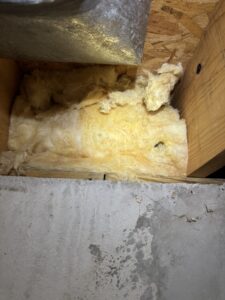
Small holes in the insulation
Mice will burrow through fiberglass insulation, leaving distinct “mouse holes” where they have been. These are around an inch across, and very round where the mouse has pushed the insulation aside. The easiest places to check are in the rim joist of your basement/crawlspace, and around any attic hatches. Attic hatches are a significant source of heat loss, so mice are often attracted to be in proximity to it.
Drafty basement
The aforementioned “mouse holes” significantly reduce insulation effectiveness, allowing cold air to pass through unimpeded. These can be a huge source of heat loss, and can reduce your R-value by over 50%, increasing heating costs in the winter. In many homes, basement insulation eventually falls part completely after years of mouse activity, leaving entire sections of wall with little to no insulation value. At that point, the insulation usually needs to be removed and replaced.
Persistant odor
If mice have been living and breeding in your home, the droppings and urine will build up over time. This often causes a strong, persistent odor that is especially noticeable when entering the basement. As insulation becomes damaged and air begins moving through it, odors and airborne particles can be pulled into the living space, which can begin to affect the health of the occupants. Studies have shown that rodent allergens can become airborne and contribute to respiratory issues, especially in enclosed environments.
If you are noticing any of these signs, the problem is usually more extensive than it appears, because most of the damage is hidden behind the walls.
Why traps alone don’t fix the problem
Many homeowners start with traps or bait stations. While these are good tools to control the existing population, the damage will remain indefinitely. To truly mitigate the issue, the homeowner must:
- Seal entry points
- Remove contaminated insulation
- Eliminate odor sources
- Prevent future infestations
Unless access points are identified and cut off, new mice will follow the same scent trails and continue entering the home. Mice are a seasonal issue and will return given the opportunity.
The Correct way to address mouse damage
1. Full Home Mouse Exclusion
Every exterior entry point—no matter how small—is identified and sealed, which prevents new mice from getting inside.
2. Removal of Contaminated Insulation
Insulation like what’s shown in the photo cannot be salvaged. Once it has been used for nesting or contaminated with droppings, it must be removed.
3. Droppings Cleanup and Sanitation
Affected areas are cleaned and sanitized to reduce odors and health risks.
4. Replacement with Spray Foam Insulation
Spray foam is especially effective following mice damage because it eliminates the conditions rodents rely on to thrive.
Spray foam insulation:
Air seals wall cavities
Does not support nesting
Blocks rodent travel paths
Improves energy efficiency
This combination not only resolves the mouse issue but also prevents it from returning, which is why we choose it as our primary insulating material.
How FVEPC can help
Fox Valley Environmental Pest Control has been helping homeowners in Kane, DuPage, and surrounding counties rid their homes of mice and the damage they cause to insulation for over 35 years! Our Purdue and State-certified technicians are trained to identify and skillfully mitigate the mouse damage to insulation, and replace it with a clean and long lasting solution. Call FVEPC today for a free quote!